Marble Restoration in the San Fernando Valley — Why Local Homeowners Call Us First
Los Angeles Kitchen and Bathroom Remodeling is a licensed general contractor based at 4419 Van Nuys Blvd, Suite 407, Sherman Oaks, CA 91403. Our team works across countertop fabrication, shower surrounds, and tile installation every day — so when a client calls about a dull or etched marble surface, restoring it falls squarely within the same hands-on work we're already doing, not some separate specialty we've bolted on.
Homeowners in Sherman Oaks, Encino, and Tarzana contact us about marble countertops, floors, and shower surfaces that have become dull, etched, or scratched over time. Common causes include acidic liquids like wine, lemon juice, or household cleaners that react with the calcite in marble; abrasive contact that leaves visible scratches; and gradual surface dullness from foot traffic or improper cleaning products. All three conditions are restorable without touching a replacement slab.
No new slab can replicate the exact veining of the stone already in your home — that original character is worth preserving. Through honing, diamond polishing, and resealing, we bring countertops, floors, and shower surrounds back to a finish that reflects the stone's natural beauty. The communities in the San Fernando Valley we work with enjoy the same high standards we bring to every remodeling project we take on.
What Our Clients See After Marble Restoration — Before and After Reality
Once the final polish and seal are complete, the transformation is hard to miss — the stone recovers the depth and reflectivity that made it worth choosing in the first place.
On kitchen countertops, etching from acidic foods and ring marks from daily use are among the most common forms of surface damage we address. After honing levels the surface and diamond polishing rebuilds reflectivity, the stone presents a uniformly smooth finish free of visible damage.
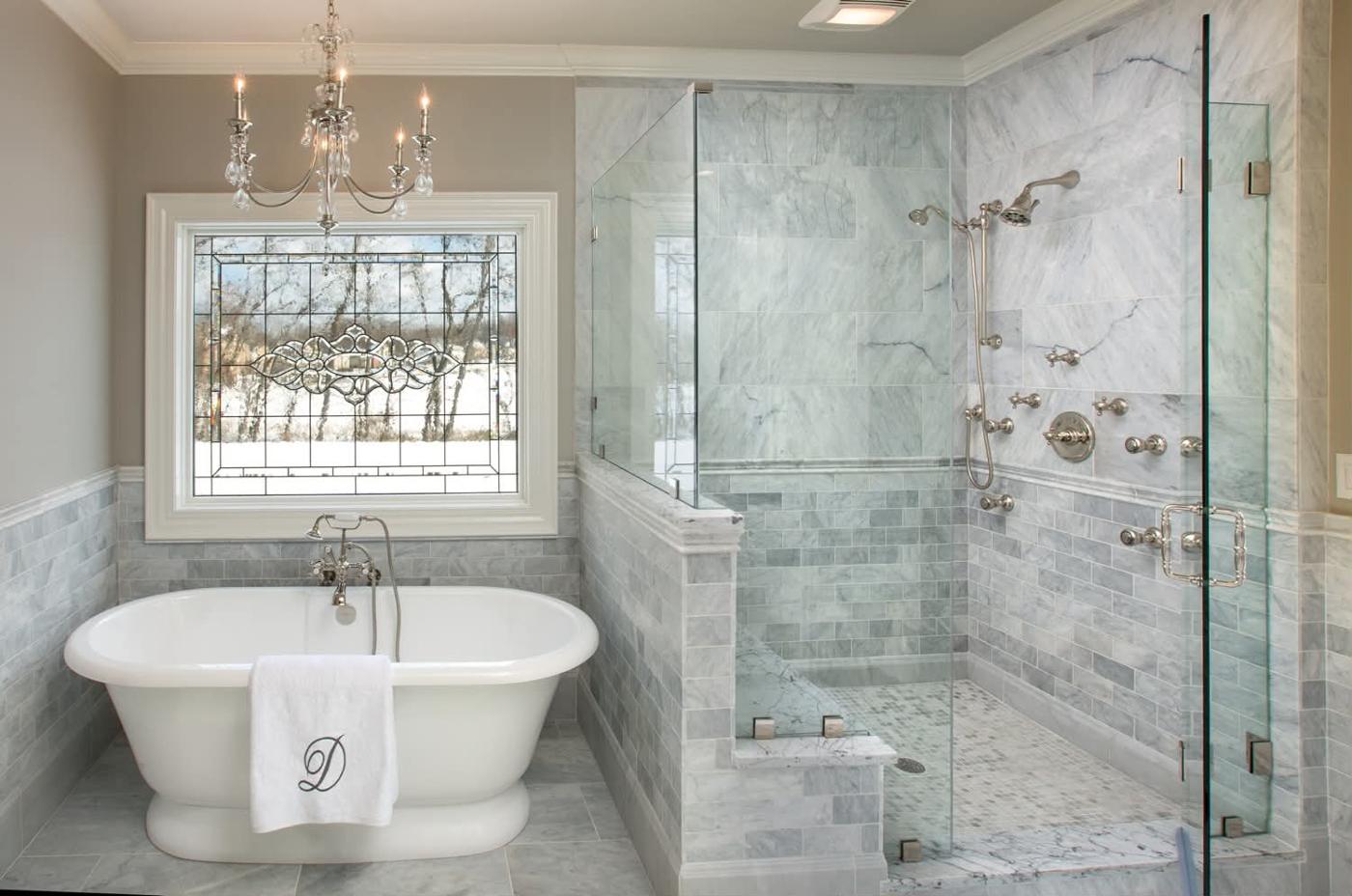
In bathroom showers, marble wall panels that have gone chalky from hard water mineral deposits and soap scum respond well to cleaning, honing, and resealing — the panels recover natural depth and warmth, and the fresh sealer creates a moisture barrier that protects the restored surface going forward.
On foyer and hallway floors, foot traffic gradually removes surface clarity in a way that is easy to overlook until the shine is gone entirely. Diamond-pad polishing addresses that wear while removing only the minimum material necessary — preserving tile thickness that repeated grinding would eventually compromise.
All three outcomes arrive without demolition, without debris hauled off a jobsite, and without the lead time of ordering replacement slabs. The stone we restore is the same one you chose and had installed. If you are weighing restoration against full replacement, contact our team for an honest assessment of what your marble can recover.
The Marble Restoration Process We Use — Honing, Diamond Polishing, and Resealing Explained
Marble restoration isn't something you can shortcut. There are three stages, and each one builds directly on what the previous step produced — pull any stage out of the sequence and the result will fail well ahead of schedule.
Honing comes first. It uses progressively finer abrasive diamond pads to grind away the damaged surface layer — the exact depth where etches, scratches, and cloudiness live. The output of honing alone is a matte or satin finish, which is intentional; the surface is now uniformly flat and ready for polishing rather than visually restored. No store-bought cream can replicate this because creams coat the surface without removing damaged material.
From there, diamond polishing takes over. Diamond-impregnated polishing pads are run through a grit sequence — the starting grit determined by how severe the damage is and how hard the specific marble is. Each successive grit refines what the previous one left behind, rebuilding surface clarity at the crystal level until the stone reaches high-gloss or semi-gloss reflectivity that matches its original finish.
Resealing is what locks the restoration in place. Because marble is naturally porous, a freshly polished surface left without a penetrating impregnating sealer will start accumulating new etches almost immediately — liquids don't wait. The sealer absorbs into the stone, is buffed clean, and protects the restoration without altering its appearance or sheen.
A common question is whether this process works on floors as well as countertops. The honest answer is yes — the same three-stage sequence applies to marble surfaces throughout the home, with pad pressure and grit selection adjusted for the specific application.
Types of Marble Surfaces We Restore in Los Angeles Homes
Kitchen marble countertops are among the most etch-prone surfaces in any home because acidic foods — citrus juice, wine, vinegar-based dressings — all react with the calcite in marble within seconds of contact. Honing, diamond polishing, and resealing address both the appearance and the surface integrity that homeowners expect from a premium countertop.
Bathroom marble floors in master bathrooms across Encino and Sherman Oaks accumulate foot traffic wear that gradually strips surface clarity. Diamond polishing is calibrated to the specific marble variety and tile format to produce consistent reflectivity across the full field.
Marble shower walls and niches are particularly vulnerable to surface degradation because constant moisture exposure accelerates breakdown. Honing followed by resealing with a moisture-appropriate penetrating sealer is essential here — the same waterproofing principles we apply in full walk-in shower installations inform how we treat and protect restored shower marble.
Vanity tops, fireplace surrounds, and marble window sills are smaller surface areas that homeowners often overlook. All are within the full scope of our restoration service — no surface is too limited in scale to warrant proper honing, polishing, and sealing.
How Marble Restoration Fits Into a Kitchen or Bathroom Remodel
Marble restoration often comes up during remodeling consultations — a homeowner budgeting for new cabinetry or a tub-to-shower conversion realizes the existing marble countertop or floor is salvageable, and redirecting that replacement budget toward custom cabinetry or a frameless glass enclosure can produce a higher-impact finished space.
A licensed general contractor is better positioned to handle this than a standalone stone-cleaning company for one practical reason: sequencing. Because Los Angeles Kitchen and Bathroom Remodeling manages plumbing, electrical, tile installation, and countertop fabrication under one roof, restoration slots into the broader project timeline without adding a separate contractor, a separate schedule, or a separate point of contact. The crew coordinating your Woodland Hills or Studio City bathroom remodel is the same crew polishing the marble floor.
Restoration also pairs naturally with countertop upgrades. Homeowners choosing new quartz or granite countertops can simultaneously have existing marble floors or shower walls restored, giving the finished space a cohesive high-end look without replacing every surface. And for homeowners who are not remodeling at all — just living with a dull or etched surface — the same licensed team handles focused marble polishing visits as a standalone service. Call us at 310-890-4885 to discuss what fits your project.
Steps to Take When Your Marble Is Damaged — A San Fernando Valley Homeowner's Guide
Stop using abrasive or acidic cleaners immediately. Common bathroom sprays and kitchen degreasers containing citric acid, vinegar, or bleach accelerate etching on an already compromised surface. Switch to a pH-neutral stone cleaner while you wait for a professional assessment — this single step prevents additional damage before restoration begins.
Document the damage in natural light before calling. Photos taken at a low angle — what photographers call raking light — reveal the full extent of etching, scratches, and dull patches far more accurately than overhead shots. These are exactly the photos our team uses to provide a free online estimate without requiring an immediate site visit.
Identify whether you are looking at etching or staining. Etches are physical surface damage — dull spots, rings, or haziness caused by acid reacting with the stone. Stains are discoloration that penetrates into the marble — dark spots from oil or rust marks from metal canisters. Both are treatable, but the processes differ, and accurate identification speeds up your estimate.
Request your free estimate with those photos in hand. Submit photos and surface details to Los Angeles Kitchen and Bathroom Remodeling online, or call +1 (310) 890-4885 to discuss your project directly. Open Sunday through Thursday from 8 AM to 6 PM, Friday from 8 AM to 2 PM, closed on Saturday.
Neighborhoods and Areas We Serve for Marble Restoration
Los Angeles Kitchen and Bathroom Remodeling serves marble restoration clients throughout the San Fernando Valley from our home base at 4419 Van Nuys Blvd in Sherman Oaks. Sherman Oaks homeowners frequently contact us for kitchen countertop and bathroom floor restoration — high-traffic surfaces in active households that are particularly prone to etching and surface wear.
In Encino, homes and recently renovated properties often feature marble in entry foyers, master bathrooms, and large-format floor tile — surfaces where our Encino remodeling work already positions us as a familiar, trusted team. These larger surface areas benefit most from the full three-stage honing, polishing, and resealing process.
Tarzana homeowners planning kitchen or bathroom renovations regularly discover that their existing marble can be restored rather than replaced — a conversation that happens naturally during the remodeling consultations our team already conducts in that community. Learn more about the full remodeling services we offer Tarzana residents.
Marble restoration is also available as part of broader remodel projects in Studio City, Calabasas, Woodland Hills, and surrounding communities — bundled into the same general contracting scope that handles every other trade on the job.
Why a Licensed General Contractor — Not Just a Stone Cleaner — Is the Right Call for Marble Restoration
A licensed general contractor brings structural awareness to marble restoration that no standalone stone-cleaning company can match. When we assess a marble shower wall, we are not just evaluating the surface — we are reading the condition of the grout joints, checking for soft spots that signal failed waterproofing, and considering whether the substrate beneath the stone is contributing to surface deterioration. A stone cleaner polishes what they can see; we account for what is underneath.
Shower marble restoration sits at the intersection of tile work, waterproofing, and surface finishing — three disciplines our team handles daily in full walk-in shower builds. When a shower's marble panels show persistent etching or discoloration despite regular cleaning, the real culprit is sometimes compromised waterproofing forcing moisture through the stone from behind. Polishing the face without addressing that issue produces a result that fails within months.
Working with a licensed, insured contractor also protects homeowners from liability exposure. Unlicensed stone cleaners frequently carry minimal or no coverage for accidental damage during in-home work — a cracked slab or a flooded subfloor becomes a dispute, not a covered claim. Los Angeles Kitchen and Bathroom Remodeling carries the insurance and licensing required for in-home work across California, and when marble restoration is part of a permitted remodel scope, we handle permitting and inspections as part of the same project. One contractor, one contract, full accountability.
Get a Free Estimate for Marble Restoration in Sherman Oaks, Encino, or Tarzana
Etched, scratched, or dull marble countertops, floors, and shower walls can be restored through honing, diamond polishing, and resealing — without removing or replacing the stone. Los Angeles Kitchen and Bathroom Remodeling serves Sherman Oaks, Encino, Tarzana, and the broader San Fernando Valley from our office at 4419 Van Nuys Blvd, Suite 407, Sherman Oaks, CA 91403.
To get the most accurate free estimate, submit photos alongside a few key details: the surface type (countertop, floor, shower wall), the marble variety if you know it, the type of damage you are seeing (etching, scratches, cloudiness, or staining), and the approximate square footage. Raking-light photos taken at a low angle show damage far more clearly than overhead shots and help our team quote confidently before anyone visits your home.
If your project expands — into a full kitchen remodel, a bathroom renovation, or a complete countertop replacement — the same licensed team handles every trade under one contract. No handoffs, no separate scheduling, one point of contact from first polish to final walkthrough.
Call us directly at +1 (310) 890-4885 or submit your photos online to receive a detailed written quote. Open Sunday through Thursday from 8 AM to 6 PM, Friday from 8 AM to 2 PM, closed on Saturday.
Frequently Asked Questions
7 questions answered
How do I know if my marble can be restored or needs to be replaced?
Most marble that appears ruined — including surfaces with deep etches, heavy scratches, or widespread dullness — can be restored through professional honing and diamond polishing rather than replaced. The key factors are whether the damage is surface-level versus structural cracking through the slab, and whether enough material thickness remains to allow grinding. A licensed contractor who works with marble countertops and flooring regularly can assess this in person and give you an honest answer about what restoration can realistically recover.
How long does marble restoration take compared to full countertop replacement?
Marble restoration on a typical kitchen countertop or bathroom floor can be completed in a single day, while full countertop replacement involves slab selection, templating, fabrication, and installation that routinely takes several weeks from start to finish. There is also no demolition debris, no disruption to cabinetry or surrounding tile, and no risk of mismatched veining when the original slab is preserved. For homeowners in Sherman Oaks, Encino, or Tarzana who use their kitchen or bathroom daily, that difference in timeline is significant.
Will restored marble stay protected, or will it etch again quickly?
Resealing with a penetrating impregnating sealer after polishing is what determines how long a restoration holds up, and a properly applied sealer absorbs into the stone rather than sitting on top of it. Marble remains a calcium-based stone that will etch from prolonged acidic contact regardless of sealing, but a fresh sealer significantly slows that process and makes routine cleaning far more effective. Resealing marble every one to two years, depending on use, is standard maintenance practice for preserved surfaces.
Can marble floors be polished without removing them or grinding down too much material?
Professional diamond polishing removes only the damaged surface layer — measured in fractions of a millimeter — making it a non-destructive process that preserves tile thickness across multiple restoration cycles. The grit sequence used is adjusted based on the hardness of the specific marble variety and the severity of the damage, which is why the process looks different for a soft Calacatta floor versus a harder Nero Marquina. Repeated improper DIY grinding with overly aggressive equipment is the actual risk to tile thickness, not a correctly staged professional restoration.
Is marble restoration a licensed contractor service or something a specialty detailer handles?
Marble restoration that is part of a broader kitchen or bathroom project — including work that involves any surface modification adjacent to cabinetry, plumbing fixtures, or shower waterproofing — falls within the scope of a licensed general contractor in California. Los Angeles Kitchen and Bathroom Remodeling handles marble restoration as part of its licensed remodeling services at 4419 Van Nuys Blvd, Suite 407, Sherman Oaks, CA 91403, which means the same team assessing your marble also understands how it interacts with the surrounding shower, countertop, or flooring installation. Standalone surface detailers operate differently and typically cannot address underlying moisture or structural concerns.
What causes marble to etch and is it different from scratching?
Etching is a chemical reaction that occurs when acidic substances — wine, lemon juice, vinegar, or even many common household cleaners — contact the calcite minerals in marble and dissolve the surface at a microscopic level, leaving dull marks that look like water spots or ghostly rings. Scratches are physical abrasions caused by grit, abrasive pads, or dragging objects across the surface. Both types of damage respond to honing and diamond polishing, but the grit sequence and pad pressure are calibrated differently depending on which type of damage — or combination of both — is present on the stone.
Does marble restoration work on shower walls with hard water staining and soap scum buildup?
Yes, shower marble with mineral deposits and soap scum responds well to restoration because the buildup is surface-level contamination, not structural damage to the stone. The process involves thorough cleaning to remove deposits, followed by honing to address any surface degradation underneath, and then resealing with a penetrating sealer rated for high-moisture environments. Shower marble typically degrades faster than countertops or floors because of constant water exposure, which is why the moisture-appropriate sealer applied after restoration is especially important in that application.